Field robotics is entering its hard phase
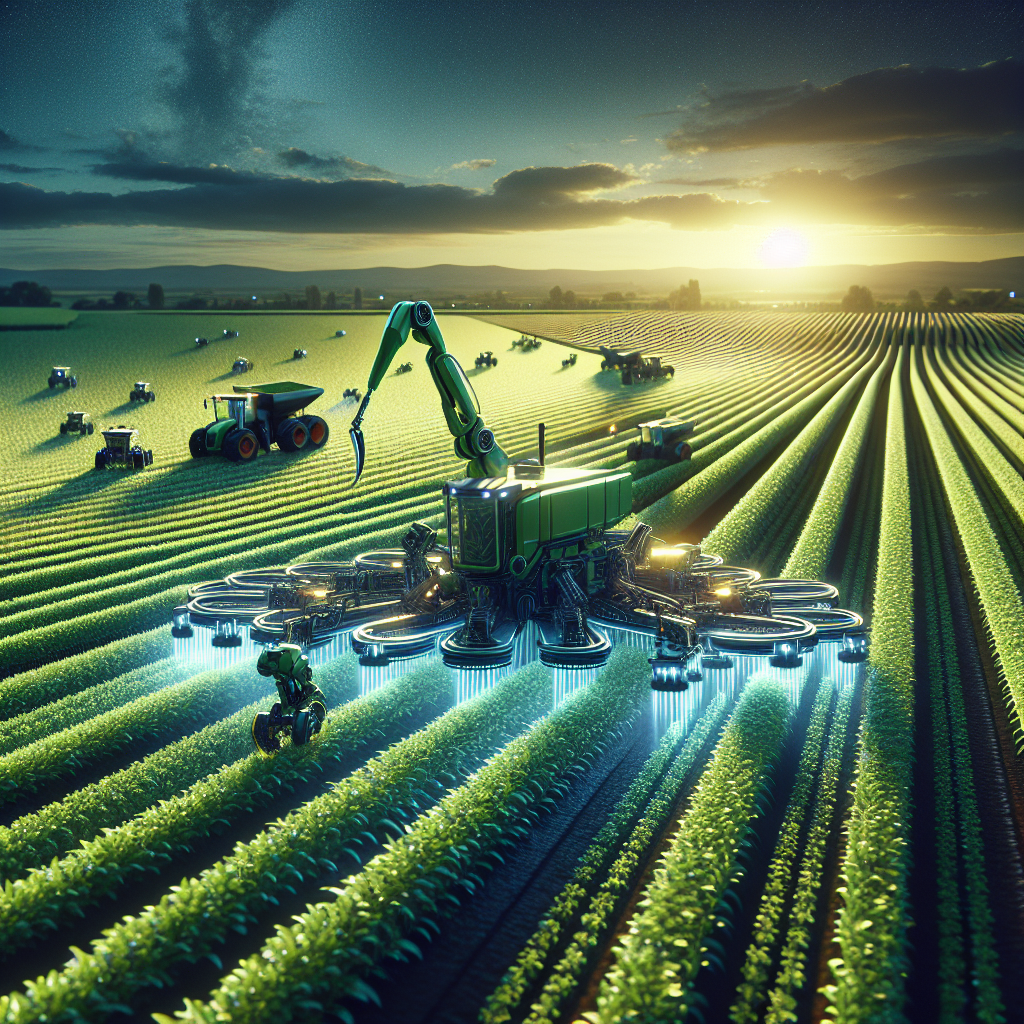
Agricultural robotics has moved beyond demo plots and investor decks. The next test is not whether robots can navigate a field, identify a crop row, or mechanically remove weeds. It is whether a company can survive the long sales cycles, fragmented farm economics, seasonal utilization constraints, and service burden that define real agricultural deployment.
That is why Naïo Technologies, the French field robotics company best known for autonomous weeding platforms, is a more interesting case study than many larger or louder names in robotics. In a market that often rewards broad claims about “autonomy for agriculture,” Naïo has largely pursued the opposite playbook: narrow use cases, slower scale-up, and an emphasis on repetitive specialty-crop tasks where labor pain is severe and chemical alternatives face increasing scrutiny.
This strategy may look conservative. In agricultural robotics, it may also be one of the few durable ones.
Naïo is not chasing the biggest market first
Many robotics startups begin by citing massive total addressable markets. In agriculture, that often means row crops on a continental scale. But the largest acreage is not automatically the best robotic entry point. Broadacre farming has harsh economics for robotics: thin margins, extreme coverage requirements, narrow operating windows, and entrenched mechanization systems that already deliver high productivity per operator.
Naïo’s more practical wedge has been specialty agriculture and mechanical weeding, especially in environments where labor is expensive and herbicide pressure is rising. Its robots have been used in vineyards and vegetable production, where growers are more willing to pay for precision intervention if it reduces manual labor, supports organic or low-chemical practices, and avoids recurring seasonal staffing problems.
This matters because agricultural robotics is often misread as a computer vision challenge. In reality, it is a business model challenge wrapped in a mobility and reliability problem. A robot does not need to solve all of farming. It needs to solve one expensive, recurring pain point better than the current mix of labor, tractors, implements, and chemicals.
The economic trap most ag-robot startups fall into
The common failure mode in farm robotics is building a technically impressive machine whose utilization profile does not support its cost structure. A robot that works beautifully for a short seasonal window but sits idle for much of the year creates a difficult equation for both growers and manufacturers.
That trap shows up in several ways:
- Seasonality: demand concentrates into narrow field windows, leaving limited annual operating hours.
- Service complexity: farms are geographically dispersed, raising maintenance and support costs.
- Attachment to crop-specific workflows: a robot optimized for one crop or spacing system may not transfer well across farms.
- Capital hesitancy: growers often prefer proven equipment with predictable resale value.
Naïo’s positioning around repetitive weeding and cultivation tasks is an attempt to avoid some of these pitfalls. These jobs are painful, recurring, and expensive enough to justify robotic substitution in select crop systems. More importantly, they align with pressure from regulation and consumer demand. In Europe especially, policy and market incentives increasingly favor reduced herbicide use, sustainable farming practices, and labor-light operations.
That combination gives robotic weeding a stronger structural tailwind than many farm automation concepts that rely purely on labor arbitrage.
Europe gives Naïo a different operating context than US ag robotics
Geography matters in agricultural robotics. A company building in Europe faces a different farm structure, labor environment, and policy climate than one targeting US broadacre operations from day one.
For Naïo, the European context has likely been an advantage. Farm sizes are often smaller, specialty crops have greater relevance, and environmental regulation can make chemical reduction a stronger economic argument. That does not make deployment easy, but it creates a market where a compact, specialized robot can fit actual field conditions instead of trying to displace giant existing machine systems.
By contrast, many US ag-robotics efforts have had to justify themselves against highly efficient large-scale machinery fleets. That pushes startups toward either very ambitious autonomy claims or expensive hardware stacks designed for huge acreage coverage. Both routes are capital intensive. Both also raise the bar for reliability and service.
Naïo’s European footprint suggests a more grounded thesis: build where the field geometry, labor cost base, and regulatory direction make robotic weeding not futuristic, but economically legible.
Specialization is often mistaken for weakness
Robotics markets tend to reward narratives about platforms. Investors like the idea of one hardware base expanding into multiple workflows, crops, and revenue streams. But in agricultural operations, excessive platform ambition can become a distraction from the task of getting one workflow to work at commercial reliability.
Naïo’s narrower identity has an underappreciated advantage. Specialization can improve:
- Operator trust, because the value proposition is easy to understand
- Support efficiency, because service teams encounter repeatable issues
- Data relevance, because perception and control models are trained around more consistent environments
- Sales clarity, because buyers can compare robot output to an existing labor or cultivation cost line
That does not mean specialization guarantees a moat. It does mean the company avoids a common robotics error: trying to become a general-purpose autonomy business before proving one repeatable unit of value in the field.
For readers evaluating robotics business durability, this robotics moat analyzer is useful for thinking through whether a company’s edge comes from software, deployment density, service capability, or workflow lock-in rather than from broad claims alone.
The hidden issue is not navigation. It is post-sale operations.
The most underrated differentiator in outdoor robotics is not just autonomy performance. It is the company’s ability to keep machines running through weather variability, soil conditions, crop differences, and customer misuse.
This is where agricultural robotics becomes operationally unforgiving. The sale is only the beginning. Companies must handle:
- On-farm onboarding and training
- Field setup and workflow integration
- Repair logistics during time-sensitive windows
- Spare parts availability across rural regions
- Software updates that do not disrupt critical operations
In effect, ag robotics companies become distributed field service organizations, not pure technology vendors. That is expensive, and it is one reason many startups underestimate the capital required to reach durable scale.
Naïo’s slower and more selective expansion may be better interpreted through this lens. Restraint can look like a lack of ambition from the outside. Inside farm robotics, it can reflect an understanding that each installed robot carries a long tail of support obligations that are difficult to centralize or automate away.
Why better-funded rivals still face a hard path
The agricultural robotics sector includes a wide range of companies pursuing autonomy, precision spraying, harvesting, and laser or mechanical weeding. Some have raised more money, entered bigger markets, or built broader narratives around AI and farm digitization. But capital alone does not solve the structural friction of agricultural deployment.
In fact, larger funding rounds can create a different problem: pressure to expand too early into adjacent crops, geographies, or product categories before one operating model is stable. That can weaken reliability, confuse the sales message, and increase service costs faster than revenue.
Naïo’s relative restraint may therefore be an advantage if the industry enters a consolidation phase. The companies most likely to endure are not necessarily those with the broadest vision statements. They are the ones whose robots fit a repeatable use case, whose support model is survivable, and whose economics make sense without assuming unrealistic fleet utilization.
That is especially relevant in today’s funding environment, where venture investors are less willing to subsidize long commercialization cycles with uncertain gross margins.
Mechanical weeding has a stronger policy tailwind than many robotics categories
Another reason Naïo’s position deserves attention is that robotic weeding sits at the intersection of three durable pressures:
- Labor scarcity in specialty agriculture
- Input scrutiny around herbicide dependence and resistance
- Regulatory and market incentives for more sustainable production methods
Not every robotics category enjoys this three-way support. Some automation products depend mainly on labor substitution. Others depend on premium pricing from environmentally conscious buyers. Robotic weeding can, in favorable conditions, access both operational and regulatory justification at once.
That does not mean every farm will adopt it quickly. Equipment replacement cycles are slow, grower risk tolerance is rationally limited, and many farms want multi-season proof before changing field practices. But categories supported by policy direction tend to have a longer strategic runway than categories dependent purely on near-term labor savings.
The strategic question is fleet density, not just unit sales
A common mistake in robotics coverage is focusing on units sold rather than the density and efficiency of deployments. In agriculture, a company with scattered customers across many regions can look healthy on paper while carrying an unsustainable service model underneath.
The stronger model is often regional density: enough customers in a given area, crop system, or dealer network to support training, maintenance, software feedback loops, and referrals at reasonable cost. This is particularly important for smaller field robotics companies because service overhead can erase hardware margin very quickly.
If Naïo can deepen density in the right specialty-crop corridors rather than merely broadening geographic presence, it improves more than revenue. It improves uptime, customer confidence, and the economics of every future deployment in that region.
What publishers and investors often miss about ag robotics
Agricultural robotics is usually framed as an innovation story. The more useful framing is systems replacement under biological and economic variability. That is a much higher bar.
The winners in this sector are unlikely to be the companies with the flashiest autonomy demos. They are more likely to be the ones that understand:
- which farm tasks have enough recurring pain to justify automation
- which crops can support the economics
- which regions create service density
- which hardware architectures can survive field reality
- which claims should remain narrow until reliability is proven
On that basis, Naïo is a stronger signal than it may first appear. Its strategy reflects a less glamorous but more realistic interpretation of what agricultural robotics requires: constrained ambition, workflow specificity, and a willingness to grow at the pace that service quality allows.
The contrarian takeaway
The agricultural robot market may not be won by the company that promises the broadest autonomous farming platform. It may be won by companies that deliberately stay small in scope long enough to become operationally credible.
Naïo Technologies embodies that contrarian possibility. In an industry where overextension is common and field conditions punish weak assumptions, a slow, specialized strategy is not a compromise. It may be the only way to build an ag-robotics business that survives past the pilot era.
If the coming years bring tighter capital, more buyer scrutiny, and a shakeout among outdoor robotics firms, specialization will no longer look like limited ambition. It will look like discipline. And in agricultural robotics, discipline may be the rarest advantage of all.