
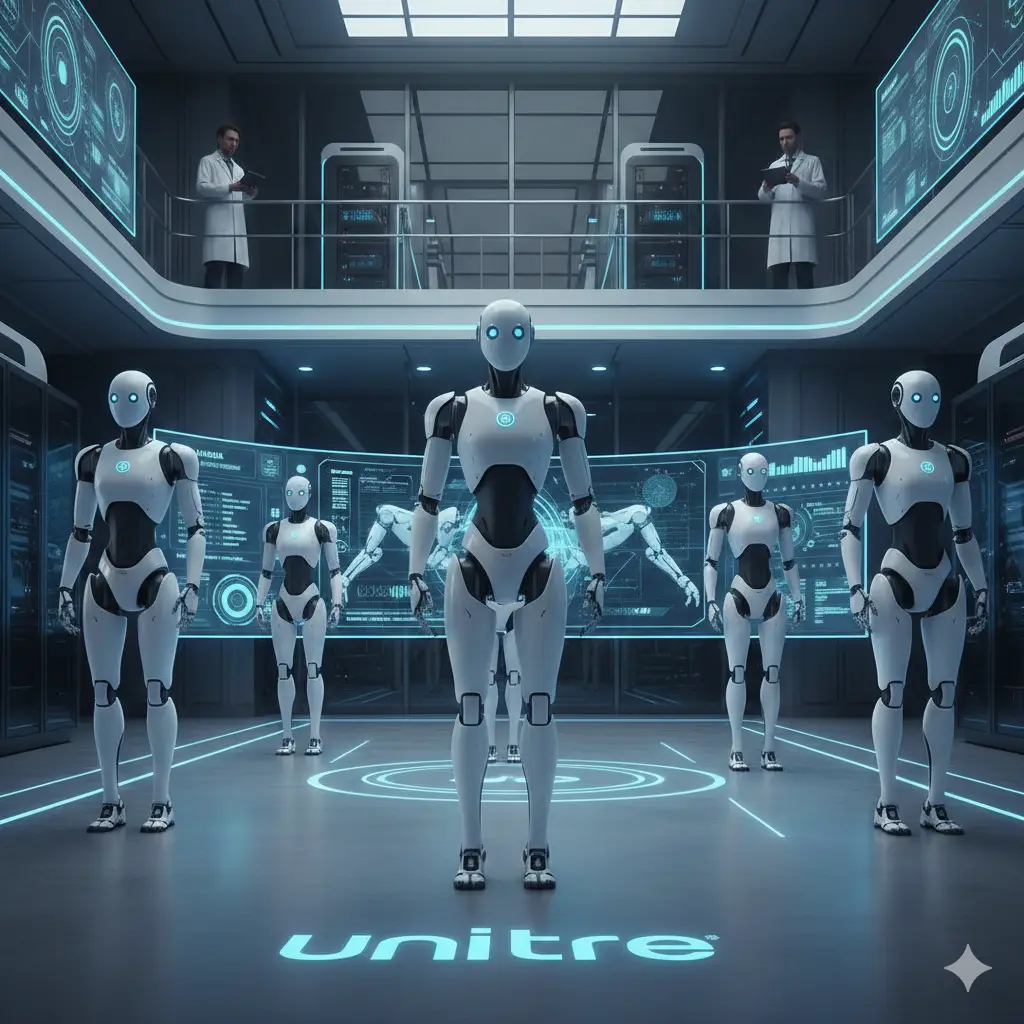
Can one of China’s most aggressive robotics companies transition from viral hardware innovator to publicly traded industrial platform?
Unitree Robotics has emerged as one of the most visible robotics companies globally, known for its quadruped robots and increasingly ambitious humanoid platforms. While the company remains privately held, it has formally entered IPO preparation stages within China’s regulatory framework, signaling serious intent to go public.
The real question is not whether Unitree wants to IPO — but whether it can convince public markets that humanoid and legged robotics are ready for scalable industrial economics.
IPO Timeline: What We Know
Unitree has completed pre-IPO tutoring procedures required for domestic listings in China. This typically precedes formal filing documentation and regulatory review.
Market expectations suggest a potential listing window around late 2025 to mid-2026, depending on regulatory approval and market conditions. A domestic Chinese exchange — such as the STAR Market — appears the most likely venue.
Earlier discussions around an overseas listing (such as Hong Kong) appear secondary to the current domestic strategy.
Valuation Expectations
Market chatter has suggested a possible valuation target in the range of 40–50 billion yuan (approximately $6–7 billion), which would position Unitree among the most valuable robotics hardware companies globally.
Achieving such a valuation would require public investors to believe:
- Humanoids are transitioning from demonstration to deployment
- Unitree’s cost-down strategy is sustainable
- Manufacturing scale is achievable
- Margins can improve over time
Public markets tend to reward durable revenue and recurring contracts — not just technological spectacle.
Revenue and Growth Narrative
Unitree has demonstrated strong product visibility and commercial traction in both quadruped and humanoid segments. Its strategy emphasizes:
- Aggressive pricing to expand market adoption
- Rapid iteration cycles
- Vertical integration of core components
- Global export ambitions
The IPO story will depend heavily on:
- Revenue growth rate
- Gross margin progression
- Unit shipment scale
- Customer concentration risk
Why Public Markets May Be Interested
Pure-play robotics exposure is limited in global equity markets. Most large robotics revenue sits within diversified industrial conglomerates. A listed Unitree would offer investors a relatively direct way to gain exposure to humanoid and legged robotics growth.
Additionally, China’s broader push into advanced manufacturing and AI-driven automation strengthens the strategic narrative.
Key Execution Risks
1. Profitability Path
Robotics hardware companies are capital-intensive. Investors will demand a clear roadmap to profitability, not just revenue growth.
2. Manufacturing Scale
Demonstration units are very different from mass production. Yield rates, actuator reliability, and supply chain efficiency will determine margin sustainability.
3. Competitive Landscape
Competition from global players — including established industrial firms and emerging humanoid developers — increases pricing pressure and innovation speed requirements.
4. Market Sentiment
IPO timing is heavily influenced by macroeconomic conditions. Hardware-centric tech listings tend to be sensitive to capital market cycles.
The Strategic Question
The core investment thesis around Unitree is not just robotics — it is cost compression at scale.
If Unitree can:
- Drive actuator costs down through vertical integration
- Standardize humanoid joint modules
- Expand international industrial contracts
- Convert pilots into recurring deployments
Then it may justify a premium valuation relative to traditional robotics manufacturers.
Bottom Line
Unitree’s IPO prospects are promising — but highly execution-dependent. The company sits at the intersection of hardware engineering, AI-driven robotics, and aggressive manufacturing economics.
Public investors will ultimately judge not the elegance of its robots, but the durability of its margins and the scalability of its deployments.
If humanoid robots are moving from spectacle to infrastructure, Unitree’s listing could become one of the defining robotics IPOs of the decade.
About RoboChronicle
RoboChronicle tracks the global robotics revolution — from industrial automation to humanoid platforms — analyzing strategy, economics, and the companies shaping embodied intelligence.